
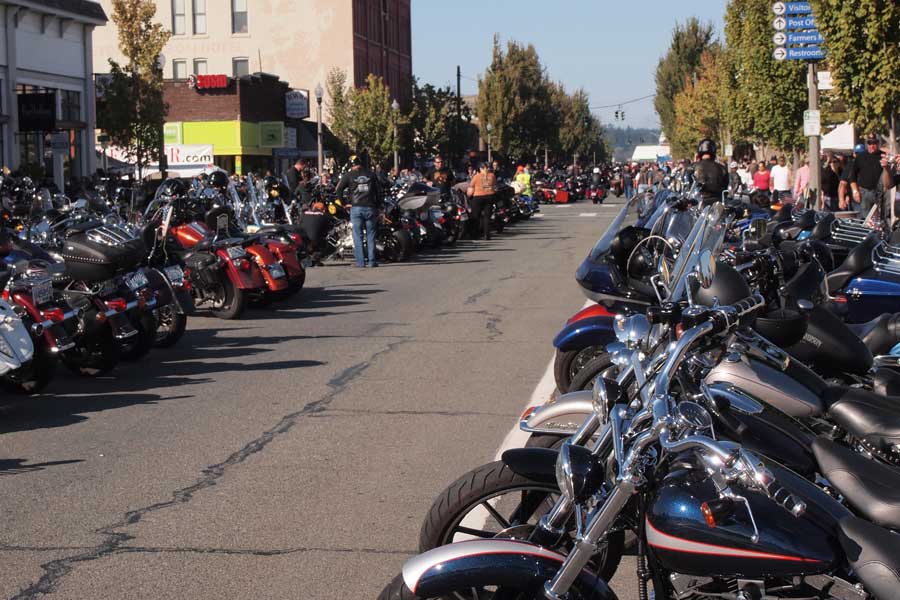
The rumble of thousands of motorcycles will be heard as this year's edition of the annual Oyster Run, known as the largest rally in the Pacific Northwest, comes to Anacortes Sunday.
Along with motorcyclists, law enforcement will be visible and on the lookout for traffic violtions.
Skagit County Sheriff’s Office, Whatcom County Sheriff’s Office, Anacortes PD, Island County Sheriff’s Office and the Washington State Patrol will be working together to focus on illegal driving behaviors by both motorcycle riders and other vehicle drivers.
“While most Washington motorcycle riders practice safety, the number of serious injuries and fatalities is concerning because we know these crashes could be prevented,” said Mark Medalen, Motorcycle Safety Program Manager at WTSC. “One serious crash is too many, and knowing what’s causing these crashes, we must work together to improve rider safety on our roads.”
In the last five years (2021 through 2025) in Washington, motorcycles accounted for only 3 percent of the total crashes, but motorcyclists were 16 percent of all traffic fatalities (583 of 3,622), according to a news release from the state Traffic Safety Commission.
Of the motorcyclists who died in crashes in the last 10 years, 35 percent didn’t have a valid motorcycle license endorsement, didn’t have a driver license, or had an unknown license status (342 of 984). Some of these fatalities were non-Washington residents. DOL reports that of the Washington residents who died in a motorcycle crash in the last 10 years, 40 percent were not legally licensed. In 2024 alone, this number increased to 54 percent.
Safe road users play a critical role in the ecosystem of our roadways. Skilled, trained and endorsed motorcyclists are less likely to be involved in serious injury or fatal collisions. In 2024, 101 of the 113 motorcyclist fatalities on Washington’s roads were known Washington residents. Of those 101 riders, 72 had no training on record. Trends indicate that training can reduce skills-based crashes, but traffic safety practitioners must also focus on improving behavior and decision-making to further reduce fatality and serious injury crashes.
“We know that a trained rider is a safer rider, and we encourage motorcyclists of all skill levels to seek out continuing training opportunities” said Robert Willis, Motorcycle Safety Program Manager with Washington Department of Licensing. “The better your skills, the more enjoyable your ride will be. Enhance your skills with beginner and advanced training courses.”
The WTSC’s motorcycle safety website, “Ride Safe, Ride On,” has a collection of resources including videos, blogs, training tools, and safety information designed to help motorcyclists and motorists learn how to safely share the road with each other.